Fes is not a city you simply visit — it is a city you experience.
Behind the gates of Fes el Bali, thousands of narrow streets lead past centuries-old madrasas, colourful souks, traditional workshops, hidden courtyards, mosques, bakeries and some of Morocco's most famous landmarks.
Short answer: The best things to do in Fes include exploring the Fes el Bali medina, visiting the Chouara Tanneries, seeing Bou Inania and Al-Attarine madrasas, discovering Al-Qarawiyyin, walking through the Mellah, watching sunset from the Merenid Tombs and tasting traditional Fassi food.
Allow at least two full days in Fes to see the main highlights without rushing. With three or four days, you can also take a day trip to Chefchaouen, Meknes and Volubilis, or the Middle Atlas.
We are a local tour company based in Fes, and we have been guiding travellers through the city since 2018. This guide brings together the places we believe are genuinely worth seeing, along with practical advice to help you enjoy Fes like a local.
Is Fes Worth Visiting?
Absolutely.
Fes is one of Morocco's four imperial cities and one of the country's most important cultural and historic destinations.
Its greatest attraction is Fes el Bali, the UNESCO-listed old medina. Unlike a modern tourist district, the medina is still a living neighbourhood. Craftsmen work in small workshops, residents shop in traditional markets, bread is baked in neighbourhood ovens, and goods are still transported through narrow streets by handcart and donkey.
If you are interested in Moroccan history, architecture, craftsmanship, food and traditional city life, Fes deserves a place on your Morocco itinerary.
Compared with Marrakech, Fes generally feels less focused on nightlife and modern tourism. Its appeal is its history, craftsmanship and the extraordinary atmosphere of the old medina.
How Many Days Do You Need in Fes?
For most first-time visitors, two full days in Fes is ideal.
1 day in Fes: Visit Bab Boujloud, Bou Inania Madrasa, Al-Qarawiyyin, Nejjarine Square, the Chouara Tanneries and the Merenid Tombs. It is possible, but you will need to move quickly.
2 days in Fes: Add Fes el Jdid, the Royal Palace gates, the Mellah, Jnan Sbil Gardens, Al Batha Museum and a pottery or zellige workshop.
3–4 days in Fes: Explore the city at a slower pace and add a day trip to Chefchaouen, Meknes and Volubilis, or Ifrane and Azrou.
If your Morocco itinerary allows it, we recommend staying at least two nights in Fes.
Best Things to Do in Fes Medina
1. Explore Fes el Bali
The best way to understand Fes is simply to walk.
Fes el Bali is a maze of narrow alleys, covered markets, workshops, fountains, mosques and residential streets. You can follow a planned route, but leave some time to wander without a strict destination.
Listen for metalworkers hammering copper, follow the smell of freshly baked bread and look inside the small workshops you pass.
One useful orientation tip is that much of the medina slopes downhill toward Place Rcif, while walking uphill generally takes you back toward the Bab Boujloud side of the old city.
Getting a little lost is part of visiting Fes.
2. Enter Through Bab Boujloud
Bab Boujloud, often called the Blue Gate, is one of the most recognisable landmarks in Fes and a popular entrance to the old medina.
The gate is decorated with traditional tilework and opens onto the busy streets around Talaa Kebira and Talaa Sghira.
Arrive in the morning if you want photographs before the area becomes busy, or come in the evening when the restaurants and food stalls around the gate become lively.
3. Walk Talaa Kebira and Talaa Sghira
These two streets form some of the main routes through Fes el Bali.
Talaa Kebira is the larger and busier of the two. Along the way you will pass food sellers, traditional shops, historic buildings and the entrance to Bou Inania Madrasa.
Talaa Sghira runs roughly parallel and offers another route through the medina.
Do not rush. A walk that looks short on a map can easily take two hours once you start stopping at workshops, monuments and cafés.
4. Visit Bou Inania Madrasa
Built during the Marinid period in the 14th century, Bou Inania Madrasa is one of the architectural highlights of Fes.
The courtyard combines carved cedar, intricate stucco and colourful zellige tilework, making it an excellent introduction to traditional Moroccan craftsmanship.
Unlike most mosques in Morocco, this historic religious school can normally be visited by non-Muslim travellers.
Visit early in the day when possible, when the courtyard tends to be quieter and the light is beautiful.
5. See Al-Attarine Madrasa
Close to Al-Qarawiyyin is another masterpiece of Marinid architecture: Al-Attarine Madrasa.
It is smaller than Bou Inania but incredibly detailed, with carved wood, stucco and geometric tilework covering much of its courtyard.
Its name comes from the nearby perfume and spice market — attar refers to perfume.
Because Bou Inania and Al-Attarine are quite different in character, it is worth visiting both.
6. Discover Al-Qarawiyyin
No visit to Fes is complete without seeing Al-Qarawiyyin, one of the city's most important religious and intellectual landmarks.
Founded in the 9th century by Fatima al-Fihri, Al-Qarawiyyin became an important centre of Islamic scholarship and learning.
The mosque itself is generally not open to non-Muslim visitors, but its courtyards and architectural details can often be glimpsed through its entrances as you walk through the surrounding streets.
Remember that this remains an active religious institution, so visit respectfully and avoid blocking entrances.
7. See the Chouara Tanneries
The Chouara Tanneries are among the most famous sights in Fes.
From terraces above the tannery, you can look down over rows of stone vats used in the traditional leather-making process.
Most viewpoints are accessed through surrounding leather shops. Staff may offer you mint to help with the strong smell.
You may be invited to look at leather products afterward. You are welcome to browse, but you should never feel obligated to buy something simply because you visited the terrace.
If you do decide to shop, bargaining is normal.
Fes also has smaller tanneries that can be quieter than Chouara.
8. Visit Nejjarine Square and the Wood Museum
Nejjarine Square is one of the prettiest small squares in the medina.
Its traditional fountain and beautifully restored funduq make it worth visiting even before you enter the Nejjarine Museum of Wooden Arts and Crafts.
Inside, the museum explores Morocco's woodworking traditions and craftsmanship.
Do not miss the rooftop terrace, which offers an excellent view over the roofs of Fes el Bali.
9. Listen to the Coppersmiths in Seffarine Square
You may hear Seffarine Square before you reach it.
For generations, metalworkers have worked here shaping and repairing copper and brass objects.
The rhythmic sound of craftsmen hammering metal is one of the characteristic sounds of the Fes medina.
It is not a staged attraction — it is a working part of the old city, which is exactly what makes it interesting.
10. Browse Souk el Henna
For a quieter market experience, find Souk el Henna.
This small traditional market sells products such as henna, cosmetics, oils and other local goods.
It feels calmer than some of the medina's main commercial streets and makes a pleasant stop while exploring the area around Nejjarine.
11. Experience Place Rcif
Place Rcif is another important gateway into Fes el Bali and a good place to observe everyday life.
The streets around Rcif are particularly interesting for food, produce and local shopping.
Stop for a coffee or mint tea and spend some time simply watching the neighbourhood.
Want to Explore the Medina With a Local?
Fes is fascinating to explore independently, but many of its workshops, historic details and hidden corners are easy to walk straight past.
Our private Fes guided tours are led by local licensed guides and can be adapted to your interests and schedule.
→ Explore our Fes tours and activities
Things to Do in Fes el Jdid and the Mellah
12. See the Royal Palace Gates
The Royal Palace of Fes, or Dar el-Makhzen, is not open to visitors, but its monumental gates are worth seeing.
The brass doors, framed by detailed zellige and carved decoration, are among the most photographed architectural sights in Fes.
The palace gates are also conveniently located near the Mellah, making the two easy to combine.
13. Walk Through the Mellah
The Mellah, Fes's historic Jewish quarter, reveals another important part of the city's history.
Its architecture is noticeably different from the traditional houses inside Fes el Bali, particularly the balconies facing the streets.
Important sites include the Ibn Danan Synagogue and the Jewish cemetery.
Allow time to explore rather than simply walking through on the way to the Royal Palace.
14. Relax in Jnan Sbil Gardens
After several hours inside the busy medina, Jnan Sbil Gardens provides a welcome change of pace.
The historic public garden has shaded paths, fountains, palms and plenty of places to sit.
It is located conveniently between Fes el Bali and Fes el Jdid and is free to enter.
At the time of writing, the gardens are generally open from 8:00 to 19:00 and closed on Mondays, although opening times can change, so check locally before visiting.
Best Viewpoints and Museums in Fes
15. Watch Sunset From the Merenid Tombs
For one of the best panoramic views of Fes, head to the Merenid Tombs on the hill above the old city.
From here, the entire medina spreads across the valley below.
The best time to visit is around an hour before sunset. You can watch the light change over the rooftops as the city transitions into evening.
A convenient option is to take a taxi uphill and return toward the medina afterward.
16. Visit Borj Nord
Not far from the Merenid Tombs is Borj Nord, a historic fortress overlooking Fes.
The building houses a museum dedicated to arms, but the elevated location also makes this area worthwhile for its views.
Borj Nord and the Merenid Tombs can easily be combined in the same outing.
17. Visit Al Batha Museum of Islamic Arts
Near Bab Boujloud, Al Batha Museum of Islamic Arts occupies a beautiful late-19th-century former palace.
After major restoration work, the museum reopened in February 2025 with a renewed focus on Islamic art and Morocco's cultural heritage.
The palace itself is part of the experience, with architecture arranged around a traditional Moroccan-Andalusian garden.
It is an excellent addition to your Fes itinerary if you are interested in Moroccan history, ceramics, decorative arts and craftsmanship.
18. Visit a Pottery and Zellige Workshop
Fes is famous throughout Morocco for ceramics and zellige.
In workshops outside the old medina, you can see how artisans shape and paint pottery and cut small pieces of tile by hand before assembling them into intricate geometric mosaics.
Watching the process gives you a much better appreciation of the amount of work behind the fountains, tables, walls and courtyards you see throughout Morocco.
Cultural Experiences to Have in Fes
19. Take a Moroccan Cooking Class
One of the best ways to understand Fassi culture is through its food.
A typical Fes cooking class may begin with shopping for ingredients in a local market before preparing Moroccan dishes in a riad or traditional home.
Depending on the class, you might prepare tagine, salads, bread or Fes's famous pastilla.
→ See our Fes cooking experiences
20. Try a Traditional Hammam
A Moroccan hammam is both a bathing tradition and a part of everyday culture.
In Fes, you can choose between a traditional neighbourhood hammam or a more private spa-style hammam inside a riad.
The traditional experience usually includes Moroccan black soap and exfoliation with a kessa glove.
If it is your first hammam, a private experience can be an easier introduction.
21. Take a Photography Tour
Fes is incredibly photogenic, but photographing the medina well is not always easy.
Light changes dramatically between narrow streets, workshops and rooftop terraces, and some of the best viewpoints are difficult to find independently.
A photography-focused walk can help you discover good locations while learning more about daily life in the medina.
22. Try Fes Street Food
Come to Fes hungry.
A food walk through the medina might include bissara, sfenj, msemen, maakouda, grilled meat, olives, dates, nougat and other sweets.
Markets around Rcif are particularly interesting for seeing a more local side of the city's food culture.
23. Drink Mint Tea on a Rooftop at Sunset
Not every memorable experience in Fes needs an entrance ticket.
Find a rooftop café, order Moroccan mint tea and watch the medina change colour as the sun goes down.
After a full day walking through crowded streets and souks, sitting above the rooftops is one of the simplest and most enjoyable ways to end the day.
Best Day Trips From Fes
24. Take a Day Trip to Chefchaouen
The blue-painted streets of Chefchaouen make it one of the most popular day trips from Fes.
The journey through northern Morocco is long, so expect a full day of travelling and exploring.
If your itinerary is flexible, spending a night in Chefchaouen gives you more time and lets you experience the town after many day visitors have left.
→ Read our Fes to Chefchaouen guide
25. Visit Meknes, Moulay Idriss and Volubilis
For travellers interested in history, this is one of the best day trips from Fes.
A typical route combines Meknes, another of Morocco's imperial cities, with Moulay Idriss Zerhoun and the Roman archaeological site of Volubilis.
Volubilis is particularly impressive for its Roman ruins and surviving mosaics.
Because these destinations can be combined efficiently, this is an excellent choice if you have one spare day in Fes.
Other Day Trips From Fes
If you have more time, consider Ifrane and Azrou in the Middle Atlas, Sefrou and Bhalil, or a longer journey south toward Merzouga and the Sahara Desert.
From Fes to the Sahara Desert
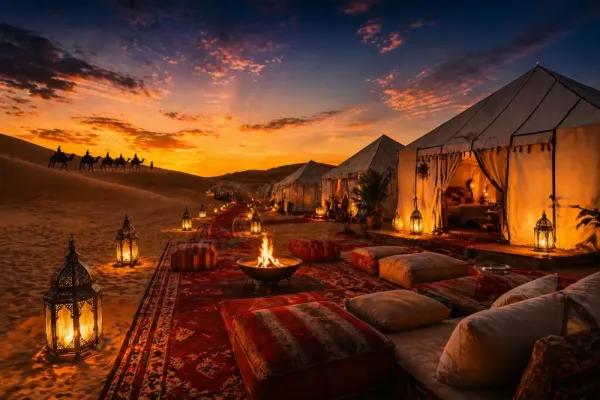
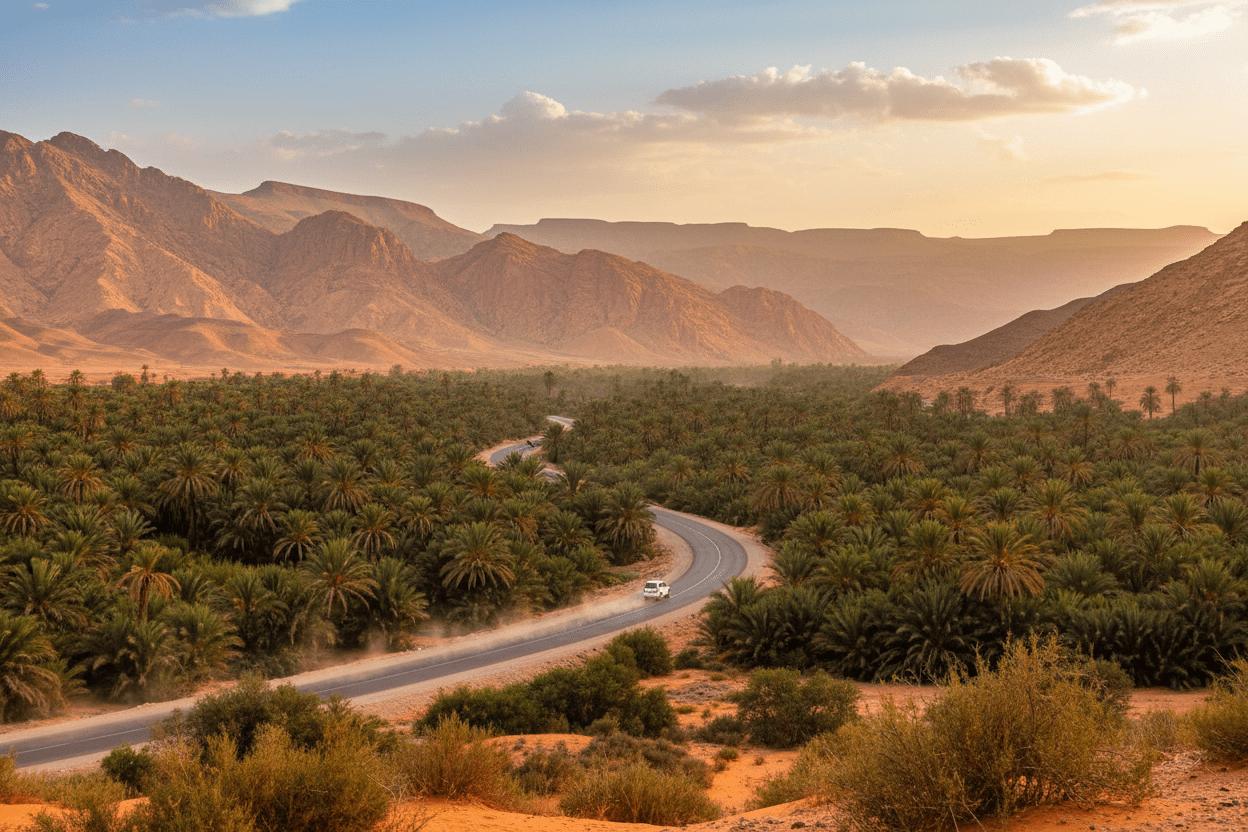
One of our most popular routes travels from Fes through the Middle Atlas toward Merzouga, where travellers can experience the Sahara dunes and spend a night in a desert camp.
→ Explore our 3-day Fes to Merzouga desert tour
What to Eat in Fes
Fes has one of Morocco's richest culinary traditions, so food should be part of your sightseeing.
Try pastilla, the famous Fassi sweet-and-savoury pastry traditionally prepared with poultry, almonds, cinnamon and sugar.
Other dishes and snacks worth looking for include harira, a tomato-based soup with legumes; bissara, a thick fava-bean soup served with olive oil and cumin; tagine; couscous; sfenj doughnuts; msemen pancakes; and traditional sweets such as chebakia and sellou.
Couscous is especially associated with Friday lunch, making Friday a good day to try it in a traditional restaurant or local home.
Best Time to Visit Fes
The most comfortable periods to visit Fes are generally spring (March to May) and autumn (September to November).
Temperatures are usually more pleasant for spending long days walking through the medina.
Summer can become extremely hot, particularly in July and August. If you visit during the hottest months, explore early in the morning, rest during the middle of the day and return outside later in the afternoon.
Winter can be cooler and wetter, but the medina is often quieter.
If your trip falls during Ramadan, check the dates for your travel year. The rhythm of the city changes, with quieter daytime hours and much livelier evenings after sunset.
Do You Need a Guide in Fes?
No — you can explore Fes independently.
In fact, we recommend spending at least a little time wandering the medina by yourself.
However, a good local guide can make a significant difference in Fes because the medina is complicated and many interesting workshops, historic details and entrances are easy to miss.
If you hire a guide, choose an official licensed guide or arrange your tour through a registered travel company, hotel or riad.
Be cautious with people who approach you in the street claiming that a road is closed or offering to guide you without being asked.
Practical Tips for Visiting Fes
Wear comfortable shoes. You will walk a lot, and many medina streets are steep, uneven or slippery.
Dress respectfully. Lightweight clothing that covers shoulders and knees is a good choice, particularly around religious sites.
Carry some cash. Small shops, cafés, markets and street-food vendors may not accept cards.
Bargain politely. Negotiating prices is normal in many souks. Keep it friendly and only bargain if you are genuinely interested in buying.
Listen for "balak!" It means you should move aside — usually because a loaded handcart, mule or donkey needs to pass.
Allow extra walking time. Distances inside the medina can be deceptive, and getting distracted is part of the experience.
Consider staying in a riad. Spending at least one night inside the medina gives you a completely different experience from visiting only during the daytime.
Frequently Asked Questions About Fes
How many days should I spend in Fes?
Two full days is a good amount of time for the city itself. Stay three or four days if you also want to take a day trip to Chefchaouen, Meknes and Volubilis, or the Middle Atlas.
Is Fes safe for tourists?
Fes is a major tourist destination, but travellers should use the same precautions they would in other busy cities. Keep valuables secure in crowded areas, be cautious with unsolicited offers of help and use licensed guides when booking guided services.
Is Fes better than Marrakech?
They offer very different experiences.
Fes is particularly strong for history, traditional craftsmanship and the atmosphere of its old medina. Marrakech offers a larger modern tourism scene, nightlife and a wider range of contemporary restaurants and resorts.
If your itinerary allows it, visit both.
Can non-Muslims enter mosques in Fes?
Most active mosques in Morocco are not open to non-Muslim visitors. Historic madrasas such as Bou Inania and Al-Attarine can be visited, and visitors can see parts of Al-Qarawiyyin from surrounding entrances.
Always follow signs and local instructions at religious sites.
What is Fes famous for?
Fes is best known for its UNESCO-listed medina, traditional leather tanneries, Al-Qarawiyyin, Marinid architecture, pottery, zellige, traditional craftsmanship and Fassi cuisine.
Is Fes walkable?
Yes. Walking is the main way to explore Fes el Bali because its narrow streets are largely inaccessible to cars.
For attractions outside the medina, such as viewpoints and some workshops, taking a petit taxi can save time.
What should I not miss in Fes?
If you only have one day, prioritise Bab Boujloud, Bou Inania Madrasa, Al-Attarine Madrasa, Al-Qarawiyyin, the Chouara Tanneries, Nejjarine Square and the Merenid Tombs.
Plan Your Visit to Fes
Fes rewards travellers who take their time.
Do not try to turn the medina into a checklist. Walk down streets simply because they look interesting. Stop to watch artisans work. Try food you have never seen before. Drink tea on a rooftop and leave some space in your itinerary for things you did not plan.
Two days will introduce you to Fes.
A little longer will help you understand why so many travellers remember it as one of the highlights of Morocco.
We are a local tour company based in Fes, offering private guided tours, cultural experiences, day trips and Sahara Desert tours designed around the way you want to travel.
Ready to explore Fes?
→ Explore our Fes tours and activities
→ Discover day trips from Fes
→ See our Fes desert tours
→ Request a free Morocco tour quote