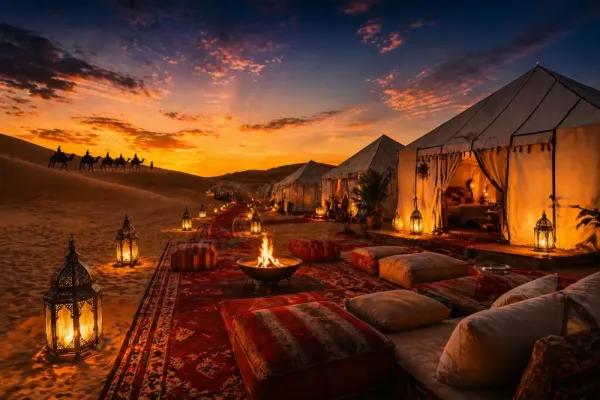
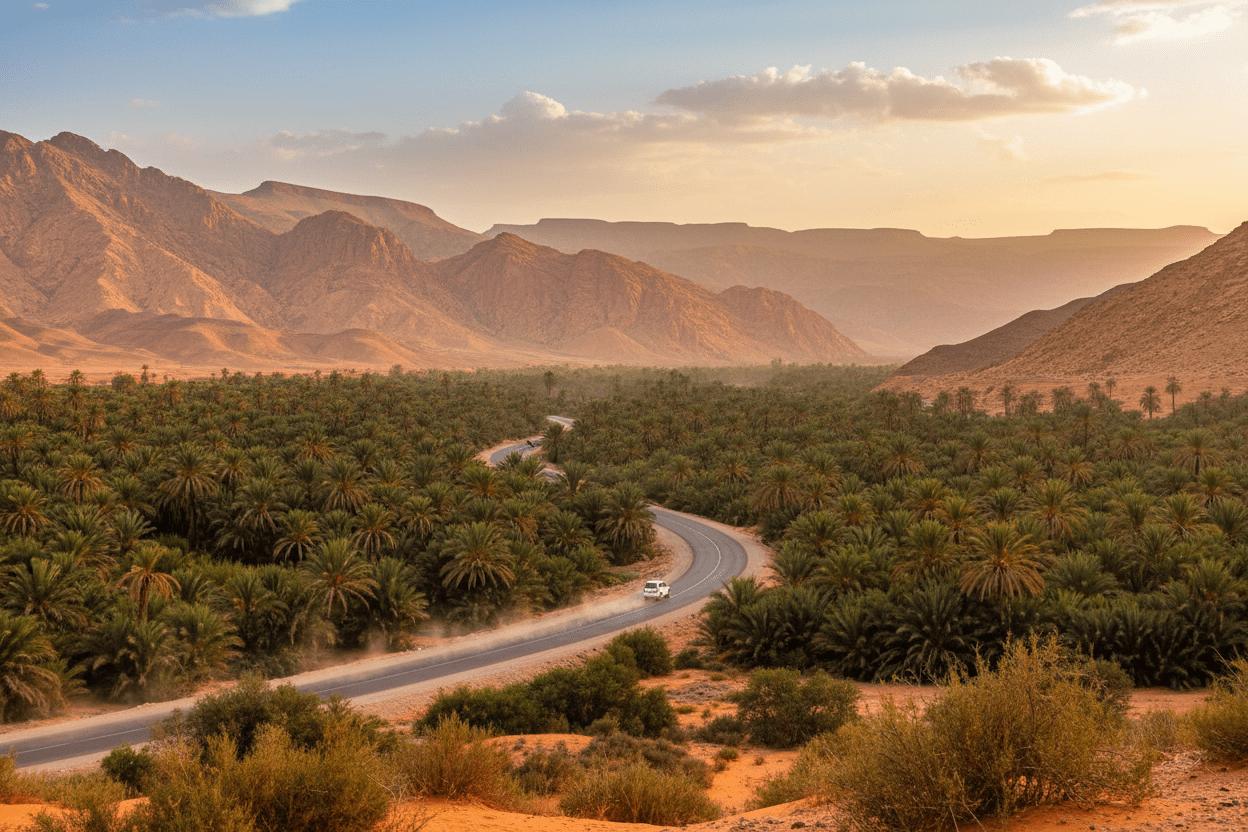
When most travelers imagine Morocco, they picture the colorful souks of Fes, the lively streets of Marrakech, ancient medinas, palm-filled oases, or the golden dunes of the Sahara. But travel into the Middle Atlas Mountains, and Morocco reveals a surprisingly different landscape.
Welcome to Ifrane, Morocco.
Located about 70 kilometers from Fes and sitting at approximately 1,650 meters above sea level, Ifrane is a peaceful mountain town surrounded by forests, lakes, springs, and some of the Middle Atlas's most beautiful natural scenery.
Its architecture, cool mountain climate, landscaped parks, and red-roofed buildings create an atmosphere quite different from Morocco's historic imperial cities.
But Ifrane is more than a beautiful mountain town.
Its location makes it an excellent destination for a day trip from Fes and an important stop for travelers heading south from Fes toward Azrou, Midelt, the Ziz Valley, and the Sahara Desert at Merzouga.
Whether you want nature, photography, hiking, snow, wildlife, or simply a peaceful escape from Morocco's busier cities, Ifrane deserves a place on your itinerary.
Here is everything you need to know before visiting.
Where Is Ifrane, Morocco?
Ifrane is located in Morocco's Middle Atlas Mountains, south of Fes and southeast of Meknes.
According to Morocco's National Tourist Office, Ifrane is around 70 km from Fes, with an estimated journey of approximately 1 hour and 13 minutes. Meknes is approximately 64 km away.
This convenient location makes Ifrane particularly interesting for travelers based in Fes.
The Middle Atlas itself stretches across roughly 350 kilometers and includes landscapes ranging from lakes and forests to volcanic plateaus and mountain communities.
Traveling from Fes toward Ifrane is therefore much more than a transfer between two cities. You leave behind the dense urban landscape and gradually enter greener, higher terrain.
The change can be dramatic, particularly if you have just spent several days exploring Fes Medina.
Why Is Ifrane Called the "Little Switzerland" of Morocco?
Ifrane is frequently nicknamed the "Little Switzerland" of Morocco, largely because its appearance differs so much from what many visitors expect to find in the country.
Instead of the narrow medieval lanes and traditional riads associated with Fes, visitors encounter spacious streets, parks, gardens, pitched roofs, and buildings adapted to a mountain climate.
In winter, snowfall can make the comparison even more striking.
The Moroccan National Tourist Office itself promotes Ifrane for its red-roofed houses, white winters, clean mountain environment, lakes, and surrounding cedar forests.
But travelers should not visit Ifrane expecting a copy of a European destination.
Ifrane has its own Moroccan identity, and its greatest attraction is its position within the beautiful landscapes of the Middle Atlas.
Best Things to Do in Ifrane, Morocco
Ifrane is relatively compact, but the city and surrounding region offer plenty to explore.
Some attractions are located directly in town, while others are best experienced as part of a drive through the surrounding countryside.
1. Walk Through the Center of Ifrane
One of the simplest ways to enjoy Ifrane is also one of the best: walk.
The city's quieter streets, green spaces, gardens, and distinctive architecture create a relaxed atmosphere.
If you have just arrived from Fes, the contrast is immediately noticeable.
Fes invites travelers into a maze of historic streets, markets, workshops, monuments, and constant activity.
Ifrane offers the opposite experience.
The pace feels slower. The roads are wider. Forested landscapes are close by, and the mountain air creates a different atmosphere.
A walk through town is therefore an ideal introduction before exploring the surrounding Middle Atlas.
2. See the Famous Ifrane Lion
One of Ifrane's most recognizable landmarks is the Ifrane Lion.
The stone lion sculpture has become a popular photo stop for visitors and is one of the attractions officially highlighted by Morocco's tourism authorities.
You don't need much time to see it, making it an easy addition to a walking tour of the town.
The sculpture is also one of those landmarks that has become closely associated with the destination itself. For many Moroccan travelers, a photograph beside the lion is almost part of the Ifrane experience.
3. Explore Ifrane's Cedar Forests
Leave the town behind and one of the main reasons to visit this region quickly becomes apparent: nature.
The Middle Atlas is famous for its cedar forests.
Morocco's tourism authorities specifically identify the Atlas cedar groves as one of the defining characteristics of Ifrane's natural environment.
Driving through these landscapes is especially rewarding because the scenery is so different from Morocco's better-known desert environments.
Tall trees, mountain roads, open spaces, lakes, and seasonal snow create a side of Morocco that surprises many first-time visitors.
The forests are beautiful throughout the year, although each season offers a different experience.
Spring brings greener landscapes.
Summer provides an escape from the intense heat found in many lower-altitude destinations.
Autumn changes the atmosphere of the forests.
Winter can cover sections of the region in snow.
4. Continue to Azrou and Look for Barbary Macaques
A visit to Ifrane is frequently combined with Azrou, another Middle Atlas town surrounded by forest landscapes.
The wider cedar forest region is famous for its Barbary macaques.
These primates are among the most memorable wildlife encounters available to visitors traveling through the Middle Atlas. Morocco's tourism office specifically highlights Barbary macaques as part of the area's fauna.
If you encounter them, observe responsibly.
Avoid feeding the monkeys, do not chase them for photographs, and keep an appropriate distance.
Wild animals should remain wild.
Responsible wildlife tourism allows travelers to enjoy the experience without encouraging behaviors that can harm the animals or disturb their natural environment.
For travelers going from Fes to Merzouga, Ifrane and the Azrou cedar forests make excellent stops before continuing south.
5. Visit Dayet Aoua Lake
Another beautiful attraction near Ifrane is Dayet Aoua, one of the region's well-known lakes.
The Moroccan National Tourist Office lists Lake Aoua among Ifrane's most popular attractions and highlights the wider region for its lakes, springs, forests, and waterfalls.
The lake area offers a quieter experience than Morocco's major tourist destinations.
Depending on conditions and season, travelers come here for the scenery, fresh air, photography, picnics, or simply to enjoy the surrounding countryside.
Dayet Aoua also works particularly well as part of a broader Middle Atlas excursion rather than as an isolated destination.
Combining Ifrane, nearby lakes, cedar forests, and Azrou allows you to see several different aspects of the region in one trip.
6. Discover Ain Vitel
Ain Vitel is another natural attraction associated with Ifrane and is officially listed among the destination's notable places.
The area offers springs and natural scenery close to town.
For travelers interested in walking and landscapes rather than simply checking famous monuments off a list, places like Ain Vitel help explain Ifrane's appeal.
The region is best experienced slowly.
Take time to walk, photograph the scenery, and appreciate the contrast with Morocco's larger cities.
7. Experience Ifrane in Winter
Winter transforms Ifrane.
Because of its elevation in the Middle Atlas, the region can receive snow, turning forests, rooftops, and mountain landscapes white.
This makes Ifrane in winter one of Morocco's most distinctive seasonal experiences.
Travelers who associate Morocco exclusively with warm weather are often surprised to discover snowy mountain scenery.
And this isn't simply about looking at snow.
Winter sports are possible in the surrounding mountains, particularly around Michlifen.
Morocco's National Tourist Office describes Michlifen as being around 17 km from Ifrane at roughly 2,000 meters altitude and highlights skiing and other outdoor activities in the area.
Conditions naturally depend on snowfall, so travelers planning specifically for winter activities should check conditions before departure.
8. Visit Michlifen
Even outside the ski season, the area around Michlifen is worth knowing.
The surrounding mountains and forests offer hiking, horseback riding, and other outdoor possibilities, while winter brings skiing and sledding when conditions permit.
Michlifen helps demonstrate the geographical diversity that makes Morocco such an interesting destination.
Within the same country, travelers can experience Atlantic beaches, Mediterranean coastlines, Sahara dunes, cedar forests, and snowy mountains.
Few destinations illustrate that contrast better than Ifrane.
9. See Al Akhawayn University
Another important landmark is Al Akhawayn University.
The university contributes significantly to the city's modern character and is among the locations highlighted by Morocco's National Tourist Office when introducing Ifrane.
Its architecture and landscaped environment fit naturally into the city's distinctive appearance.
Even if you're only passing through Ifrane for several hours, seeing the university area adds another dimension to your understanding of the town.
Ifrane as a Day Trip From Fes
One of the best reasons to include Ifrane in your Morocco itinerary is its proximity to Fes.
At around 70 kilometers from Fes, Ifrane can easily form part of a Middle Atlas day excursion.
A typical route might look like:
Fes → Ifrane → Cedar Forest → Azrou → Middle Atlas countryside → Fes
This type of excursion provides an excellent contrast to a traditional Fes sightseeing day.
One day you can be walking through Fes el-Bali, surrounded by historic architecture, souks, craftsmen, madrasas, and centuries-old streets.
The next, you can be surrounded by cedar trees, mountain air, lakes, and wildlife.
This diversity makes staying in Fes particularly rewarding for travelers who want to experience more than the city itself.
Ifrane on the Journey From Fes to Merzouga
Ifrane is also important for travelers planning a Fes to Merzouga desert tour.
Instead of treating the journey from Fes to the Sahara as time spent simply getting from point A to point B, the route can become an important part of the Morocco experience.
Leaving Fes, travelers climb into the Middle Atlas and reach Ifrane.
From Ifrane, the journey can continue toward the cedar forests around Azrou.
Then the road heads farther south toward Midelt.
As the journey continues, the green forests gradually give way to increasingly dry mountain landscapes.
Beyond the Middle Atlas, travelers approach the spectacular Ziz Valley, with its palm-filled oasis landscapes, before eventually reaching Erfoud, Rissani, and the dunes of Merzouga.
The transformation is remarkable:
Fes → Ifrane → Cedar Forests → Midelt → Ziz Valley → Merzouga → Sahara Desert
It is one of the best examples of Morocco's extraordinary geographical diversity.
Best Time to Visit Ifrane
There isn't one single best season for visiting Ifrane.
The right time depends on what you want to experience.
Spring in Ifrane
Spring is excellent for travelers interested in nature.
The countryside becomes greener, temperatures can be comfortable for walking, and the surrounding Middle Atlas landscapes are particularly attractive.
It is an excellent period for combining Ifrane with Fes and other destinations.
Summer in Ifrane
Because Ifrane sits at higher elevation, its climate can offer relief from hotter destinations during summer.
This makes the town and surrounding forests popular for outdoor escapes.
Walking, forest excursions, lake visits, and relaxing in nature can all be enjoyable during this period.
Autumn in Ifrane
Autumn is another attractive time for exploring the Middle Atlas.
The changing season creates beautiful colors and cooler conditions.
Photographers may particularly appreciate the atmosphere of the forests at this time of year.
Winter in Ifrane
Winter offers the most unusual experience.
Snow can transform the town and surrounding mountains, and nearby locations such as Michlifen become destinations for winter recreation when conditions permit.
However, mountain weather can affect roads and travel times.
Always check conditions before setting out.
What to Wear in Ifrane
One important thing to remember is that Ifrane's weather can be considerably cooler than Fes.
Don't assume that because you're traveling in Morocco, warm clothing will never be necessary.
During spring and autumn, layered clothing is useful because temperatures can change throughout the day.
During winter, bring appropriate warm clothing, particularly if you plan to spend significant time outside or visit higher areas.
Comfortable walking shoes are also recommended if you intend to explore forests, lakes, or natural sites.
In summer, sun protection and water remain important even when temperatures feel more comfortable than elsewhere.
How Long Should You Spend in Ifrane?
For travelers staying in Fes, one day can be enough to experience Ifrane together with nearby Middle Atlas attractions.
A full-day excursion gives you time to see the town, stop at scenic locations, visit the cedar forests, and continue toward Azrou.
Travelers particularly interested in nature, relaxation, or outdoor activities may prefer an overnight stay.
If you're traveling onward to Merzouga, Ifrane can instead become one of several memorable stops during the journey south.
The best option depends on your overall Morocco itinerary.
Is Ifrane Worth Visiting?
Yes—particularly if you're already visiting Fes.
Ifrane provides something completely different from Morocco's imperial cities.
You won't find the enormous historic medina of Fes or the famous dunes of Merzouga.
Instead, you discover another Morocco: mountain air, cedar forests, lakes, parks, wildlife, red-roofed buildings, and snow-covered landscapes in winter.
Its accessibility from Fes makes the destination even more attractive.
Rather than spending an entire day traveling to reach the mountains, visitors can incorporate Ifrane naturally into a day excursion or a longer journey south.
Combine Fes, Ifrane and the Sahara
For travelers wanting to experience several sides of Morocco in one itinerary, combining Fes, Ifrane, the Middle Atlas, and Merzouga is an excellent choice.
Begin among the historic streets and souks of Fes.
Travel into the Middle Atlas and discover the peaceful atmosphere of Ifrane.
Continue through the cedar forests around Azrou.
Watch the green mountain environment slowly become more arid around Midelt.
Travel through the oasis landscapes of the Ziz Valley.
And finally arrive at the golden dunes of the Sahara near Merzouga.
Few journeys demonstrate Morocco's diversity so clearly.
Discover Ifrane With Fes Morocco Tours
Ifrane Morocco may look completely different from the country's famous imperial cities and desert landscapes, but that is exactly what makes it worth visiting.
Its location in the Middle Atlas gives travelers access to cedar forests, lakes, mountain scenery, wildlife, winter snow, and peaceful outdoor spaces.
For visitors beginning their journey in Fes, Ifrane is particularly convenient. It can be experienced on a day trip from Fes or incorporated naturally into a longer Fes to Merzouga desert tour.
With Fes Morocco Tours, your journey can connect the historic beauty of Fes with Ifrane, the cedar forests of the Middle Atlas, the landscapes around Azrou and Midelt, the Ziz Valley, and eventually the unforgettable Sahara Desert.
Sometimes the most memorable part of traveling through Morocco isn't just where you arrive—it's everything you discover along the road.