Fes to Volubilis, Moulay Idriss & Meknes Day Trip: Complete Guide
Fes is one of Morocco's most fascinating destinations, but some of the country's greatest historical treasures are found just beyond the ancient medina. If you have an extra day in Fes and want to discover Roman ruins, sacred Moroccan history, imperial architecture, and beautiful countryside, a Fes to Volubilis and Meknes day trip is one of the best excursions you can take.
The journey combines three remarkably different destinations: Volubilis, Morocco's famous Roman archaeological site; Moulay Idriss Zerhoun, a historic hill town closely connected to the beginnings of the Idrisid dynasty; and Meknes, one of Morocco's four imperial cities.
What makes this route particularly attractive is the variety. Instead of spending the entire day visiting similar monuments, you travel through several chapters of Moroccan history. Ancient Roman streets and mosaics are followed by a traditional Moroccan hill town and then the monumental gates and historic quarters of an imperial capital.
For history lovers, photographers, couples, families, and travelers looking for interesting day trips from Fes, this route deserves a place on your Morocco itinerary.
Why Take a Day Trip from Fes to Volubilis and Meknes?
Fes contains enough attractions to keep travelers busy for several days. Its medina, madrasas, souks, workshops, tanneries, palaces, and historic neighborhoods provide an extraordinary introduction to Moroccan culture.
However, traveling outside Fes gives you a broader understanding of the country's history.
Within a single day, you can leave the narrow streets of Fes and travel through the countryside toward some of northern Morocco's most important historical destinations.
A typical Fes to Volubilis day trip includes:
- Meknes and its imperial monuments
- Moulay Idriss Zerhoun
- The archaeological ruins of Volubilis
- Scenic countryside and agricultural landscapes
- Traditional Moroccan towns and villages
- Opportunities for photography
- Local restaurants and Moroccan cuisine
The route is especially convenient because the destinations can be combined into one full-day excursion before returning to Fes.
Volubilis: Discover Ancient Roman Morocco
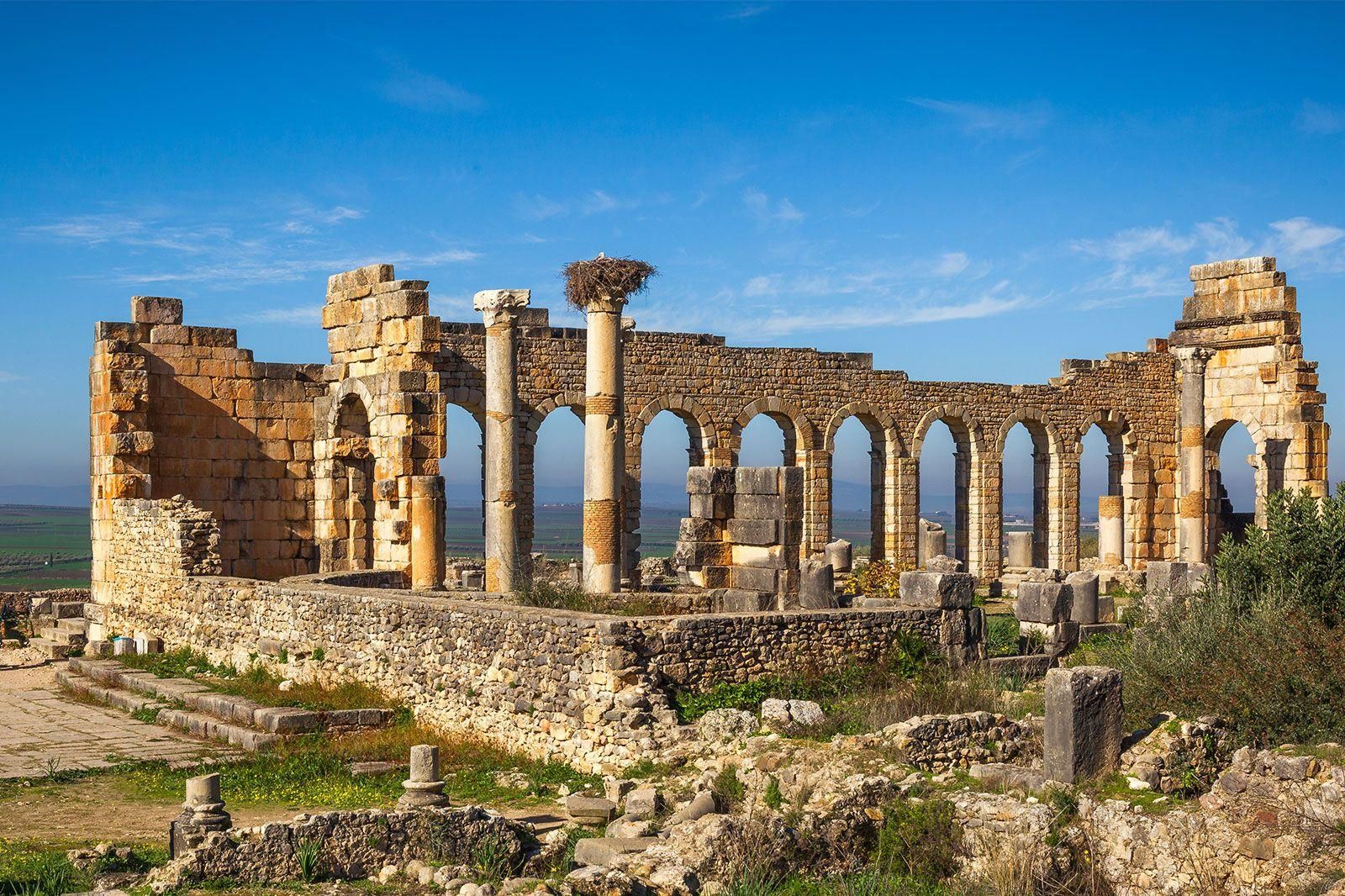
One of the main highlights of the journey is Volubilis, known locally as Walili.
Standing among the ancient columns, stone streets, arches, houses, and mosaics can feel very different from the Morocco most travelers imagine.
Long before the imperial medinas that characterize cities such as Fes and Marrakech, this region was home to an important ancient settlement.
Volubilis developed through different historical periods and became an important city during Roman rule in North Africa. Today, its archaeological remains provide fascinating evidence of the civilizations that occupied the region.
The archaeological site covers a large open landscape near the Zerhoun hills, allowing visitors to walk between ancient structures while enjoying views of the surrounding countryside.
What Can You See at Volubilis?
Volubilis is not simply a collection of isolated stones.
As you explore the archaeological site, the remains begin to reveal how the ancient city was organized.
Visitors can discover traces of houses, public buildings, streets, columns, arches, olive-processing areas, and beautifully preserved floor mosaics.
Some of the most interesting features include:
The Triumphal Arch
The monumental arch is one of the most recognizable structures at Volubilis and creates one of the site's most impressive views.
Ancient mosaics
Several former Roman houses contain detailed mosaics depicting mythological figures, animals, and decorative scenes.
Seeing these works in their original archaeological environment is one of the highlights of visiting Volubilis.
Roman streets
Walking along the ancient stone streets helps visitors imagine the scale and organization of the former city.
Columns and public buildings
Remains of monumental structures show how important Volubilis became during antiquity.
But perhaps the greatest attraction is the overall atmosphere. The ruins stand in an open agricultural landscape rather than being surrounded by a modern city.
This gives Volubilis a peaceful character and makes it an excellent place for photography.
Why Is Volubilis Important?
Volubilis represents much more than Morocco's Roman history.
The archaeological remains demonstrate how several civilizations and cultural influences interacted in this region over centuries.
After the Roman period, the area continued to play a role in Moroccan history. It later became associated with Idris I, founder of the Idrisid dynasty.
This connection creates an interesting historical bridge between Volubilis and the nearby town of Moulay Idriss Zerhoun.
For travelers, this means the Fes to Volubilis and Meknes tour is not simply about visiting three unrelated attractions.
The destinations are connected through Morocco's history.
Moulay Idriss Zerhoun: A Sacred Town in the Hills
A short distance from Volubilis lies Moulay Idriss Zerhoun, one of Morocco's historically important towns.
Built across two hills, the town creates a beautiful scene of whitewashed houses rising above the surrounding countryside.
Moulay Idriss is named after Idris I, who played a central role in the establishment of the Idrisid dynasty.
The town developed around his mausoleum and became an important pilgrimage destination.
For visitors traveling between Fes, Meknes, and Volubilis, Moulay Idriss provides another perspective on Moroccan history.
Volubilis introduces the ancient world, while Moulay Idriss helps tell the story of early Islamic Morocco.
What to Do in Moulay Idriss
A visit does not necessarily need to be long.
One of the best ways to experience Moulay Idriss is simply to walk through part of the town and observe its atmosphere.
Narrow streets climb between traditional houses, small shops, local bakeries, cafés, and neighborhood squares.
From higher viewpoints, visitors can enjoy panoramic views over the town and surrounding Zerhoun landscape.
The town also offers a quieter experience than Morocco's major tourist cities.
Remember that Moulay Idriss has considerable religious significance. Visitors should therefore dress respectfully and pay attention to signs concerning areas that may have restricted access.
Even a relatively short stop can add valuable cultural context to your day trip.
Meknes: Morocco's Imperial City
The next major destination is Meknes, one of Morocco's four imperial cities alongside Fes, Marrakech, and Rabat.
Although it sometimes receives less international attention than Fes or Marrakech, Meknes played an important role in Moroccan history.
Its imperial identity is particularly associated with Sultan Moulay Ismail, who transformed Meknes into a major capital.
Large walls, monumental gateways, royal structures, granaries, stables, squares, and historic neighborhoods reflect the scale of his ambitions.
For travelers coming from Fes, Meknes offers an interesting contrast.
Fes is famous for its dense medieval medina and maze-like streets. Meknes often feels more spacious around its imperial monuments and monumental gates.
Bab Mansour: The Monumental Gateway of Meknes
Among the most recognizable landmarks in Meknes is Bab Mansour.
Located near Place El Hedim, the gate is celebrated for its monumental proportions and elaborate Moroccan decoration.
Its arches, tilework, inscriptions, and architectural details make it one of the city's essential sights.
Even travelers visiting Meknes for only a few hours normally make Bab Mansour one of their main stops.
The surrounding area also provides convenient access to other parts of the historic city.
Place El Hedim
Close to Bab Mansour is Place El Hedim, one of the central public spaces of historic Meknes.
The square creates a transition between different sections of the old city and is surrounded by restaurants, cafés, shops, and historic buildings.
Depending on the time of day, the atmosphere can change considerably.
During a day trip, it is a useful place to stop, explore nearby streets, or take a break before continuing to other monuments.
Mausoleum of Moulay Ismail
Another important historical site is the Mausoleum of Moulay Ismail.
Moulay Ismail ruled Morocco during the late seventeenth and early eighteenth centuries and made Meknes the center of his empire.
His reign had an enormous influence on the architecture and development of the city.
The mausoleum reflects traditional Moroccan craftsmanship through its courtyards, arches, decorative plaster, woodwork, and tile patterns.
Access conditions can vary, so travelers should follow local instructions during their visit.
Sahrij Swani and the Royal Complex
The imperial ambitions of Moulay Ismail extended beyond palaces and gates.
Large structures were created to support the royal city, including storage buildings, water systems, granaries, and stables.
The Sahrij Swani area is another well-known part of Meknes' imperial heritage.
Exploring these structures helps visitors understand the enormous scale of the historical royal complex.
Rather than viewing Meknes simply as another medina, visitors begin to see it as a carefully developed imperial capital.
What Does a Fes to Volubilis and Meknes Day Trip Look Like?
Your journey normally begins in the morning with pickup from your hotel or riad in Fes.
Leaving the city behind, you travel through the landscapes of northern Morocco toward Meknes and the Zerhoun region.
Depending on the itinerary, you may visit Meknes first or begin with Volubilis.
A typical day might look like this:
Morning: Leave Fes for Meknes
Depart Fes after breakfast and travel toward Meknes.
Spend the morning discovering some of the city's most important landmarks, including Bab Mansour, Place El Hedim, the imperial areas, and the Moulay Ismail Mausoleum when accessible.
You can also explore sections of the old city and experience the quieter atmosphere that distinguishes Meknes from Fes.
Midday: Lunch
Stop for lunch in Meknes or near Moulay Idriss.
Moroccan cuisine offers plenty of choices for a day trip, including tagine, couscous, grilled meats, salads, soups, and fresh bread.
Taking time for lunch also provides a useful break before exploring the archaeological site.
Early Afternoon: Moulay Idriss Zerhoun
Continue toward Moulay Idriss.
Explore part of the town, appreciate the hilltop views, and learn about its connection with Idris I and early Moroccan history.
Afternoon: Explore Volubilis
Continue the short distance to Volubilis.
Walk through the archaeological site, see its mosaics, columns, ancient streets, monumental structures, and surrounding landscapes.
After the visit, begin your return journey to Fes.
Evening: Return to Fes
Arrive back in Fes in the late afternoon or early evening depending on traffic, your departure time, and how long you spend at each destination.
How Much Time Should You Spend at Volubilis?
Most visitors should allow approximately one to two hours to explore Volubilis comfortably.
Travelers particularly interested in archaeology or photography may want more time.
The site is relatively open, and there are many details that can easily be missed when rushing.
Hiring a knowledgeable guide can also make the experience more meaningful because many ruins are much easier to understand when their original function and historical context are explained.
What Should You Bring?
The route is comfortable for most travelers, but a few simple preparations can improve your experience.
Wear comfortable walking shoes because Volubilis contains uneven ancient surfaces.
During warmer months, bring sunscreen, sunglasses, and a hat. Much of the archaeological site is exposed to the sun.
A reusable bottle of water is also useful.
During cooler months, carrying a light jacket is recommended, especially when leaving Fes early in the morning.
Photography enthusiasts should make sure their camera or phone is fully charged because Volubilis, Moulay Idriss, and Meknes all provide excellent photography opportunities.
Best Time to Visit Volubilis and Meknes
The excursion can be taken throughout much of the year.
Spring is particularly attractive because the landscapes surrounding Volubilis and Moulay Idriss can be green and pleasant.
Autumn is another excellent period, with generally comfortable conditions for walking around archaeological and historical sites.
Summer trips are also possible, although midday temperatures can become hot. Starting early helps you take advantage of cooler morning conditions.
Winter can bring cooler temperatures and occasional rain, so checking the forecast and bringing suitable clothing is recommended.
Is the Trip Suitable for Families?
Yes.
A private Fes to Meknes and Volubilis day trip can work particularly well for families because the itinerary offers variety.
Children are not spending the entire day inside museums. Instead, the journey includes road travel, open archaeological areas, historic towns, viewpoints, and large monuments.
Families with very young children should remember that Volubilis has uneven surfaces, so comfortable footwear and appropriate planning are important.
Private Tour or Independent Travel?
Both approaches are possible.
Independent travelers can organize transportation between destinations, but visiting three places in one day requires coordination.
A private day trip provides a simpler experience because transportation is arranged throughout the route.
It can also provide more flexibility with departure times, photography stops, lunch, and the amount of time spent at each destination.
For travelers with limited time in Morocco, convenience can be especially valuable.
Is Volubilis Worth Visiting from Fes?
For travelers interested in history, culture, archaeology, architecture, or photography, Volubilis is absolutely worth considering.
Fes already provides an extraordinary look at medieval and traditional Morocco. Volubilis adds an entirely different historical dimension.
The combination becomes even stronger when Volubilis is visited together with Moulay Idriss and Meknes.
Instead of seeing only Roman ruins, you experience a journey across different periods of Moroccan history.
That diversity is what makes this one of the most rewarding day trips from Fes.
Fes, Meknes and Volubilis: A Journey Through Moroccan History
One of the most interesting aspects of this excursion is how the three destinations complement one another.
Volubilis introduces visitors to Morocco's ancient past and the influence of Roman civilization in North Africa.
Moulay Idriss connects the region with Idris I and the development of early Islamic Morocco.
Meknes represents another period entirely, revealing the grandeur of Morocco's imperial era.
And when you return to Fes, you come back to another imperial city whose medina preserves centuries of religious, commercial, artistic, and architectural history.
Few day trips offer this much historical variety within such a manageable route.
Frequently Asked Questions
Can you visit Volubilis from Fes in one day?
Yes. Volubilis, Moulay Idriss, and Meknes can be combined into a full-day trip from Fes. This is one of the most convenient ways to experience all three destinations without changing hotels.
Is Meknes worth visiting from Fes?
Yes. Meknes offers imperial architecture, monumental gates, historic squares, royal heritage, and a different atmosphere from Fes. Combining Meknes with Volubilis makes the journey particularly worthwhile.
Can you visit Meknes and Volubilis on the same day?
Yes. Meknes and Volubilis are commonly combined with Moulay Idriss Zerhoun as part of a day excursion from Fes.
How long should I spend at Volubilis?
Approximately one to two hours works well for many travelers. History and archaeology enthusiasts may prefer a longer visit.
Do I need a guide at Volubilis?
A guide is not essential for walking around the site, but historical explanations can make the ruins, buildings, mosaics, and development of the ancient city easier to understand.
What should I wear at Volubilis?
Comfortable walking shoes are important. During warmer weather, wear breathable clothing and bring sun protection. Respectful clothing is recommended when visiting Moulay Idriss and religious locations.
Is Volubilis a UNESCO World Heritage Site?
Yes. The Archaeological Site of Volubilis is recognized as a UNESCO World Heritage Site because of its exceptional archaeological, historical, and cultural significance.
Is Meknes a UNESCO World Heritage Site?
Yes. The Historic City of Meknes is also included on UNESCO's World Heritage List and is recognized for its historic urban fabric and monumental imperial architecture.
Plan Your Fes to Volubilis and Meknes Day Trip
Fes may be the starting point, but some of Morocco's most interesting historical discoveries are waiting just outside the city.
A Fes to Volubilis, Moulay Idriss and Meknes day trip brings together ancient archaeology, religious history, imperial architecture, Moroccan countryside, and local culture in a single journey.
Walk among Roman mosaics at Volubilis. Look across the hills from Moulay Idriss Zerhoun. Stand before the monumental architecture of Meknes. Then return to the ancient medina of Fes with a much broader understanding of Morocco's remarkable past.
For travelers who want to see more than the main tourist attractions and understand how different civilizations shaped Morocco, this is one of the most rewarding excursions to add to a Fes itinerary.
With Fes Morocco Tours, you can experience the route as a private journey with comfortable transportation, flexible stops, and enough time to appreciate the history and landscapes along the way.
Discover Meknes, Moulay Idriss, and Volubilis and turn one free day in Fes into a journey through centuries of Moroccan history.