Morocco is a country where every journey reveals something extraordinary. From the blue-painted streets of Chefchaouen to the historic medina of Fes, the golden dunes of the Sahara Desert, and the lively markets of Marrakech, Morocco offers an unforgettable combination of culture, adventure, history, and natural beauty.
If you are planning your first trip to Morocco, deciding where to go and how long to stay can feel overwhelming. With so many beautiful destinations, choosing the right route is essential.
A 10-day Morocco itinerary offers an excellent opportunity to discover several of the country's most remarkable destinations while experiencing its diverse landscapes and traditions.
In this comprehensive Morocco travel guide, we will explore a suggested 10-day route, the best places to visit, transportation options, accommodation tips, and practical advice to help you organize your adventure.
Whether you are traveling as a couple, with family, or with friends, this itinerary will help you experience the highlights of Morocco.
For travelers seeking a personalized experience, Fes Morocco Tours offers private Morocco tours and customized itineraries designed around different travel interests.
Why Choose a 10-Day Morocco Itinerary?
Ten days provide a useful balance between sightseeing, cultural experiences, and scenic travel.
Morocco is geographically diverse. Within a single journey, you can explore ancient imperial cities, mountain landscapes, traditional villages, and the Sahara Desert.
A well-planned 10-day trip allows you to experience several highlights without changing accommodation every single night.
What Can You Experience in 10 Days?
During your Morocco adventure, you can:
- Explore the blue streets of Chefchaouen.
- Discover the UNESCO-listed medina of Fes.
- Travel through the Middle Atlas Mountains.
- Experience camel trekking in the Sahara Desert.
- Spend a night in a traditional desert camp.
- Visit spectacular gorges and historic kasbahs.
- Cross the High Atlas Mountains.
- Discover Marrakech's famous markets and monuments.
The most important consideration is choosing a realistic route.
Travel distances between Moroccan destinations can be significant, particularly when crossing mountain regions.
For this reason, many visitors prefer a private tour that combines transportation, sightseeing, and accommodation planning.
Overview: The Perfect 10-Day Morocco Travel Route
This itinerary begins in Tangier and ends in Marrakech, creating a north-to-south journey through some of Morocco's most memorable destinations.
DayDestinationMain Experience1TangierArrival and coastal exploration2ChefchaouenBlue Medina and Rif Mountains3FesHistoric imperial city4FesCultural sightseeing and local crafts5Ifrane and MideltMiddle Atlas landscapes6MerzougaSahara Desert and camel trekking7Todra Gorges and DadesDesert valleys and mountain scenery8Ouarzazate and Ait BenhaddouKasbahs and High Atlas crossing9MarrakechMedina, monuments, and souks10MarrakechFinal exploration and departure
This route works particularly well for travelers arriving in northern Morocco and departing from Marrakech. Some days involve long drives, so flexibility is important.
If you prefer an organized journey, explore the private Morocco tours from Tangier for itineraries connecting northern Morocco with the Sahara and imperial cities.
Day 1: Arrive in Tangier – The Gateway to Morocco
Your Moroccan adventure begins in Tangier, a coastal city overlooking the Strait of Gibraltar.
Tangier has long been a meeting point between Africa and Europe. Its international history, Mediterranean atmosphere, and Atlantic coastline make it an interesting starting destination.
After arriving at Tangier Ibn Battouta Airport or the city's port, transfer to your accommodation and enjoy your first impressions of Morocco.
Best Things to Do in Tangier
Explore the Kasbah
Tangier's Kasbah is a historic neighborhood with narrow streets, traditional architecture, and scenic viewpoints.
Visit the Medina
The old medina offers markets, cafés, small shops, and a glimpse into everyday Moroccan life.
Discover Cape Spartel
Located outside the city center, Cape Spartel is known for its lighthouse and dramatic coastal scenery.
Enjoy Moroccan Cuisine
Begin your culinary journey with traditional dishes such as tagine, couscous, or grilled seafood.
Spend your first night in Tangier and prepare for the journey into the Rif Mountains.
Day 2: Tangier to Chefchaouen – Discover the Blue Pearl
After breakfast, travel toward Chefchaouen, one of Morocco's most photographed destinations.
Nestled in the Rif Mountains, Chefchaouen is famous for its beautiful blue-painted streets, peaceful atmosphere, and traditional architecture.
The journey from Tangier generally takes approximately two to three hours by road, depending on traffic and stops.
What Makes Chefchaouen Special?
Unlike Morocco's larger imperial cities, Chefchaouen offers a slower and more relaxed atmosphere.
Its blue stairways, colorful flowerpots, and charming alleyways create excellent opportunities for photography.
Top Attractions in Chefchaouen
The Blue Medina
Walk through the historic streets and discover picturesque corners, artisan shops, and local cafés.
Plaza Uta el-Hammam
This central square is surrounded by restaurants and traditional buildings.
The Kasbah
Visit the historic fortress and its gardens to learn more about the city's heritage.
The Spanish Mosque Viewpoint
For panoramic views of Chefchaouen, follow the hillside path toward the Spanish Mosque, particularly near sunset.
Stay overnight in Chefchaouen to experience its atmosphere after many daytime visitors have departed.
Day 3: Chefchaouen to Fes – Enter Morocco's Cultural Capital
On the third day, continue toward Fes, one of Morocco's most historically significant cities.
The journey typically takes around four hours, although travel time depends on the route and road conditions.
Fes is renowned for its medieval medina, Islamic architecture, traditional craftsmanship, and cultural heritage.
Founded in the early Islamic period, the city became an important center of education, commerce, and religious scholarship.
Discover Fes el-Bali
Fes el-Bali is the oldest part of the city and forms part of the UNESCO-listed Medina of Fez.
Its winding streets are filled with workshops, historic buildings, traditional markets, and remarkable architectural details.
Walking through the medina feels very different from exploring a modern city.
Cars cannot navigate many of its narrow passageways, and traditional forms of transport remain visible.
Spend the Night in a Traditional Riad
One of the most memorable accommodation experiences in Morocco is staying in a riad.
These traditional houses often feature interior courtyards, decorative tiles, carved plasterwork, and rooftop terraces.
A riad in Fes provides an excellent opportunity to experience Moroccan hospitality.
Day 4: Explore Fes – History, Architecture, and Moroccan Traditions
Dedicate your fourth day to discovering Fes in greater depth.
Because the medina contains numerous winding streets and historic landmarks, exploring with a knowledgeable local guide can make the experience more informative.
Visit Al-Qarawiyyin
Founded in 859, Al-Qarawiyyin is among the world's oldest continuously operating educational institutions.
Its historical importance reflects the role Fes played in scholarship and intellectual exchange.
Visitors should remember that access to religious buildings may be restricted.
Discover Bou Inania Madrasa
Bou Inania Madrasa is one of the finest examples of Marinid architecture in Fes.
Its intricate tilework, carved wood, and decorative plasterwork demonstrate the remarkable skills of Moroccan artisans.
See the Chouara Tanneries
The traditional tanneries of Fes are among the city's best-known attractions.
Visitors can observe the historic leather-processing industry from surrounding terraces.
Explore Traditional Souks
Fes is famous for handmade pottery, leather goods, textiles, brassware, and other traditional crafts.
Visiting artisan workshops provides an opportunity to understand the skills passed down through generations.
Taste Traditional Fassi Cuisine
Fes is also celebrated for its culinary heritage.
Try dishes such as pastilla, a traditional sweet-and-savory pastry, or enjoy a Moroccan cooking experience.
After a full day of sightseeing, return to your riad for a relaxing evening.
Day 5: Fes to Midelt – Discover the Middle Atlas Mountains
Day five introduces a completely different side of Morocco.
Leave the historic city of Fes and travel south through the Middle Atlas Mountains.
The scenery gradually changes from urban landscapes to forests, mountain towns, and open valleys.
Stop in Ifrane
Ifrane is often called the Switzerland of Morocco because of its alpine-style architecture and cooler mountain climate.
The town is especially attractive during winter, when surrounding areas may receive snowfall.
Explore the Cedar Forests Near Azrou
Continue toward the cedar forests around Azrou, where Barbary macaques inhabit parts of the region.
Visitors should observe wildlife responsibly and avoid feeding wild animals.
Travel Toward Midelt
Midelt is located between the Middle Atlas and High Atlas mountain regions.
The surrounding landscapes offer beautiful views and a quieter atmosphere than Morocco's major tourist cities.
Spending the night in Midelt breaks up the journey to the Sahara and allows travelers to enjoy the mountain scenery at a more comfortable pace.
Day 6: Midelt to Merzouga – Experience the Sahara Desert
For many travelers, visiting the Sahara Desert is the highlight of a Morocco vacation.
On day six, continue south through the Ziz Valley and toward Merzouga, a village near the impressive Erg Chebbi dunes.
The landscape changes dramatically as mountain scenery gives way to rocky desert plains, palm groves, and eventually towering sand dunes.
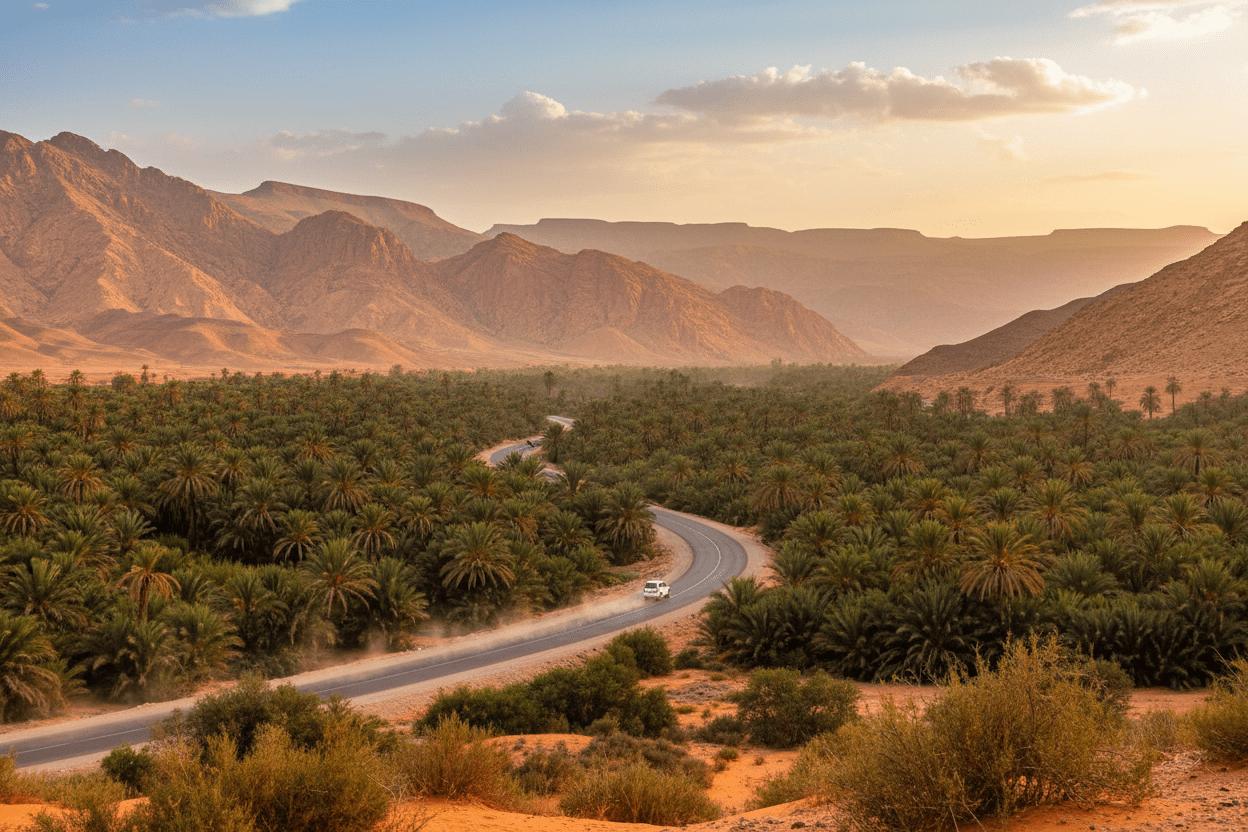
Discover the Ziz Valley
The Ziz Valley is known for its extensive palm groves and dramatic landscapes.
Scenic viewpoints provide opportunities to appreciate the contrast between green vegetation and surrounding desert terrain.
Arrive in Merzouga
Merzouga is one of Morocco's most popular destinations for Sahara experiences.
The nearby Erg Chebbi dunes rise above the surrounding desert and create spectacular scenery, particularly during sunrise and sunset.
Enjoy Camel Trekking
A camel trek across the dunes is a traditional tourist experience in Merzouga.
As the afternoon light changes, the sand takes on beautiful golden and orange colors.
Travelers who prefer not to ride camels can ask about alternative transfers to their desert camp.
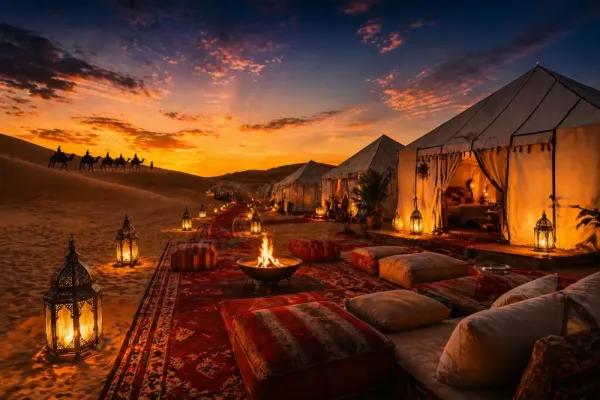
Spend a Night in a Sahara Desert Camp
An overnight desert camp is an unforgettable experience.
Depending on your chosen accommodation, you may enjoy comfortable tents, traditional Moroccan meals, and evenings beneath the stars.
The Sahara's peaceful atmosphere provides a welcome contrast to the busy streets of Morocco's cities.
For travelers interested in longer desert experiences, Fes Morocco Tours offers itineraries combining the Sahara with other Moroccan destinations.
Day 7: Merzouga to Todra Gorges and Dades Valley
Wake up early to watch the sunrise over the Sahara dunes.
After breakfast, continue your journey west toward some of southern Morocco's most impressive landscapes.
Visit Todra Gorges
Todra Gorges is a dramatic canyon near Tinghir, where towering rock walls rise above a narrow valley.
The gorge is a popular destination for sightseeing, photography, and rock climbing.
A short walk through the accessible sections allows visitors to appreciate its remarkable geological formations.
Discover Traditional Villages
The surrounding region contains traditional settlements, palm groves, and agricultural landscapes.
These areas provide insight into rural life in southern Morocco.
Continue to Dades Valley
The Dades Valley is famous for its winding roads, unusual rock formations, and scenic mountain views.
It is sometimes associated with the broader Route of a Thousand Kasbahs, a historic corridor of fortified architecture.
Spend the night in a guesthouse or hotel overlooking the valley.
Day 8: Dades Valley to Marrakech via Ait Benhaddou
On day eight, travel toward Marrakech through Ouarzazate, Ait Benhaddou, and the High Atlas Mountains.
This is one of the most scenic driving days of the itinerary.
Discover Ouarzazate
Often called the Gateway to the Desert, Ouarzazate is known for its kasbah architecture and connection to the film industry.
Several international productions have used the region's dramatic landscapes as filming locations.
Visit Ait Benhaddou
Ait Benhaddou is a UNESCO World Heritage Site and one of Morocco's most recognizable historic settlements.
Its traditional earthen buildings demonstrate the architectural heritage of southern Morocco.
Walking through the ksar provides opportunities to admire historic structures and panoramic views.
Cross the High Atlas Mountains
Continue toward Marrakech via the Tizi n'Tichka mountain pass.
The road offers spectacular views of mountain peaks, valleys, and villages.
Travel times can vary considerably because of weather, traffic, and mountain road conditions.
Arrive in Marrakech in the evening and settle into your accommodation.
Day 9: Marrakech – Explore the Red City
Marrakech is one of Morocco's most famous destinations.
Known as the Red City because of its distinctive reddish architecture, Marrakech combines historic monuments, lively markets, gardens, and contemporary hospitality.
Visit Jemaa el-Fnaa
Jemaa el-Fnaa is the city's famous central square.
During the day, visitors encounter market stalls and street activity. In the evening, the square becomes especially lively with food vendors and performers.
Explore the Marrakech Medina
The medina is filled with traditional souks selling lanterns, carpets, leather goods, spices, ceramics, and handmade souvenirs.
Allow time to wander through the market streets and discover artisan workshops.
Discover Bahia Palace
Bahia Palace is admired for its decorative courtyards, gardens, and beautiful Moroccan architectural details.
Visit Ben Youssef Madrasa
This historic madrasa is known for its elegant courtyard, carved woodwork, and geometric decoration.
Relax in a Traditional Hammam
After several days of travel, a Moroccan hammam can be an excellent way to relax.
Choose a reputable establishment and confirm the available treatments before booking.
End the evening with dinner at a rooftop restaurant overlooking the medina.
Day 10: Final Morning in Marrakech and Departure
Your final day in Morocco can be adjusted according to your departure schedule.
If time permits, enjoy breakfast at your riad before exploring one final attraction.
Visit Majorelle Garden
Majorelle Garden is known for its distinctive blue architecture, exotic plants, and peaceful pathways.
Advance reservations are advisable, especially during busy travel periods.
Buy Last-Minute Souvenirs
Marrakech offers a wide selection of traditional Moroccan products, including ceramics, textiles, argan oil, and handmade decorative items.
Enjoy Your Final Moroccan Meal
Before leaving, consider enjoying another traditional tagine or a refreshing glass of Moroccan mint tea.
Arrange your airport transfer with enough time for traffic and airport procedures.
Your 10-day Morocco adventure ends with memories of imperial cities, mountain landscapes, desert sunsets, and remarkable cultural experiences.
Best Time to Visit Morocco for a 10-Day Trip
Morocco is a year-round destination, but the best season depends on your preferred activities.
Spring: March to May
Spring is an excellent season for exploring Moroccan cities and traveling through the mountains.
Temperatures are generally comfortable, and many landscapes become greener after winter rainfall.
Autumn: September to November
Autumn is another popular season for Morocco tours.
Conditions are often pleasant for sightseeing and Sahara Desert experiences, particularly outside the hottest weeks.
Summer: June to August
Summer can be extremely hot in Marrakech and desert regions.
Travelers visiting during this period should plan activities carefully, stay hydrated, and avoid strenuous outdoor activities during peak heat.
Coastal destinations may offer milder conditions.
Winter: December to February
Winter brings cooler temperatures, particularly in mountain regions and at night in the Sahara.
Snow and difficult road conditions can affect some mountain routes.
Travelers should pack warm clothing and allow flexibility in their itineraries.
How Much Does a 10-Day Morocco Trip Cost?
The cost of traveling through Morocco depends on your accommodation preferences, transportation choices, travel season, and activities.
Budget travelers may prefer public transportation and modest guesthouses, while visitors seeking convenience often choose private tours.
Main Travel Expenses
Accommodation: Morocco offers everything from affordable guesthouses to luxury riads and boutique hotels.
Transportation: Costs depend on whether you use trains, buses, rental cars, or private drivers.
Meals: Local restaurants and traditional eateries can provide excellent value, while upscale restaurants cost more.
Activities: Guided city tours, cooking classes, desert camps, and cultural experiences may add to the total cost.
Private Tours: Organized tours may combine transportation, selected accommodation, guided activities, and desert experiences.
When comparing packages, always check what is included, particularly meals, entrance fees, accommodation standards, and airport transfers.
Should You Choose a Private Morocco Tour?
A private Morocco tour can be especially useful when your itinerary includes several destinations and long driving distances.
Traveling independently is possible, but organizing transportation between remote desert locations can require additional planning.
Benefits of Private Tours
Flexible itineraries
Private tours can often be adapted to your preferred destinations, interests, and available travel dates.
Comfortable transportation
A dedicated vehicle can make long journeys between cities and mountain regions more convenient.
Local knowledge
Experienced drivers and guides can introduce travelers to cultural traditions, scenic stops, and lesser-known places.
Simplified planning
An organized itinerary reduces the need to coordinate multiple transportation and accommodation bookings independently.
Personalized experiences
Private tours can be suitable for couples, families, photographers, and small groups seeking a more tailored experience.
Explore the available itineraries at Fes Morocco Tours to find a journey that matches your travel plans.
Essential Travel Tips for First-Time Visitors to Morocco
Preparing properly can make your Morocco trip significantly more enjoyable.
1. Pack for Different Climates
Morocco's climate varies between coastal cities, mountain regions, and desert areas.
Bring comfortable walking shoes, breathable clothing, sun protection, and warmer layers for evenings.
2. Carry Some Moroccan Dirhams
The Moroccan dirham is the local currency.
Although many hotels and larger businesses accept cards, cash remains useful for smaller purchases and traditional markets.
3. Respect Local Customs
Morocco has a rich cultural heritage and strong traditions.
Dress respectfully in religious or conservative settings and ask permission before photographing individuals.
4. Learn Basic Local Expressions
Arabic and Amazigh are Morocco's official languages, while French is also widely used.
Learning simple expressions such as salam (hello) and shukran (thank you) can enhance interactions.
5. Stay Hydrated
Carry drinking water, particularly when exploring cities during warm weather or visiting desert regions.
6. Allow Extra Travel Time
Mountain roads, traffic, sightseeing stops, and weather can affect travel schedules.
Avoid planning too many activities on days involving long drives.
7. Book Important Experiences in Advance
Popular riads, desert camps, and guided tours may fill quickly during peak travel seasons.
Advance planning can help secure your preferred accommodation and experiences.
Frequently Asked Questions About a 10-Day Morocco Itinerary
Is 10 days enough to visit Morocco?
Yes. Ten days are sufficient to explore several major destinations, including Fes, Chefchaouen, the Sahara Desert, and Marrakech. However, Morocco is a large and diverse country, so it is better to focus on one well-planned route than attempt to visit every region.
What is the best itinerary for first-time visitors to Morocco?
A popular option combines northern Morocco, Fes, the Sahara Desert, and Marrakech. The best itinerary depends on your arrival airport, departure city, travel preferences, and available time.
Is it worth visiting the Sahara Desert?
For many travelers, the Sahara is one of the highlights of visiting Morocco. The dunes near Merzouga offer memorable landscapes, desert camps, and opportunities to experience sunrise and sunset over the sand.
Can I visit Morocco without a tour guide?
Yes. Independent travel is possible in Morocco, especially between major cities. However, a private guide or driver can be helpful when visiting historic medinas or traveling between remote destinations.
How many days should I spend in Fes?
Two days provide a good introduction to Fes. This allows time to explore the historic medina, visit architectural landmarks, discover traditional crafts, and experience local cuisine.
Is Morocco suitable for family vacations?
Morocco can be an excellent family destination. Private transportation, family-friendly accommodation, and flexible sightseeing schedules can make the journey more comfortable for travelers with children.
What should I wear in Morocco?
Comfortable clothing suitable for the season is recommended. Lightweight layers work well during warmer months, while warmer clothing is important for mountain regions and desert nights. Modest clothing is appreciated in many traditional settings.
Where should I start my Morocco itinerary?
Tangier, Casablanca, Fes, and Marrakech are all possible starting points. Choose the city that best matches your international flights and desired travel route.
Plan Your Morocco Adventure with Fes Morocco Tours
A 10-day journey through Morocco is an opportunity to experience a country of extraordinary contrasts.
From the peaceful blue streets of Chefchaouen to the historic medina of Fes, from the golden dunes of Merzouga to the vibrant souks of Marrakech, every destination offers something unique.
The key to a successful Morocco vacation is thoughtful planning, realistic travel distances, and enough flexibility to enjoy each experience.
At Fes Morocco Tours, travelers can explore private tours and customized journeys connecting Morocco's imperial cities, mountain landscapes, cultural attractions, and Sahara Desert.
Whether you are planning a romantic escape, family holiday, or cultural adventure, discover the available Morocco itineraries and begin organizing your next journey.
Explore Fes Morocco Tours and start planning your unforgettable Moroccan adventure.