Morocco is a country of ancient medinas, colorful souks, Atlantic beaches, dramatic mountains, historic cities, and Sahara landscapes. For first-time visitors, it can also feel very different from destinations they may already know.
A little preparation makes traveling around Morocco much easier. From money and transportation to clothing, food, bargaining, languages, and local customs, here are 20 essential things to know before visiting Morocco for the first time.
1. Morocco Is More Diverse Than You Might Expect
Morocco is not only Marrakech and the Sahara.
The country offers remarkably different experiences depending on where you travel. You can explore the medieval streets of Fes, see the blue-painted lanes of Chefchaouen, cross the Atlas Mountains, visit Atlantic coastal towns, discover palm-filled valleys, and spend a night near the Sahara dunes.
If you have enough time, combining several regions will give you a much broader picture of the country.
2. Arabic and Amazigh Are Morocco's Official Languages
Morocco's official languages are Arabic and Amazigh. Moroccan Arabic, commonly called Darija, is widely spoken in everyday life.
French is also commonly used in business, tourism, restaurants, hotels, and many urban areas. Spanish can be encountered particularly in parts of northern Morocco.
English is increasingly used in tourism, but knowing a few local expressions can still be useful.
Some simple Darija words include:
- Salam — Hello
- Shukran — Thank you
- Afak — Please
- Labas? — How are you?
- Bslama — Goodbye
3. Moroccan Dirham Is the Local Currency
The local currency is the Moroccan dirham (MAD).
Cards are accepted at many hotels, larger restaurants, modern stores, and established businesses, but cash remains important for smaller shops, markets, cafés, taxis, tips, and purchases in traditional medinas.
ATMs are widely available in larger cities and tourist destinations.
It is useful to carry smaller notes and coins for everyday expenses rather than relying only on large banknotes.
4. Cash Is Especially Useful in the Medina
When exploring the old medinas of cities such as Fes and Marrakech, cash can be particularly useful.
Small food stalls, traditional workshops, independent shops, local cafés, and market vendors may not accept cards.
Keep some cash accessible while storing larger amounts securely.
5. Morocco Has Excellent Train Connections Between Major Cities
Train travel is one of the most convenient ways to move between several major Moroccan cities.
The rail network connects destinations including Tangier, Rabat, Casablanca, Marrakech, Meknes, and Fes. Morocco also operates the Al Boraq high-speed train on the Tangier–Kenitra–Rabat–Casablanca corridor.
For destinations outside the rail network, buses, private transfers, rental cars, and organized tours are common alternatives.
6. Getting to the Sahara Takes Time
One of the most common planning mistakes is underestimating Morocco's distances.
The Sahara cannot realistically be treated as a quick excursion from every major city.
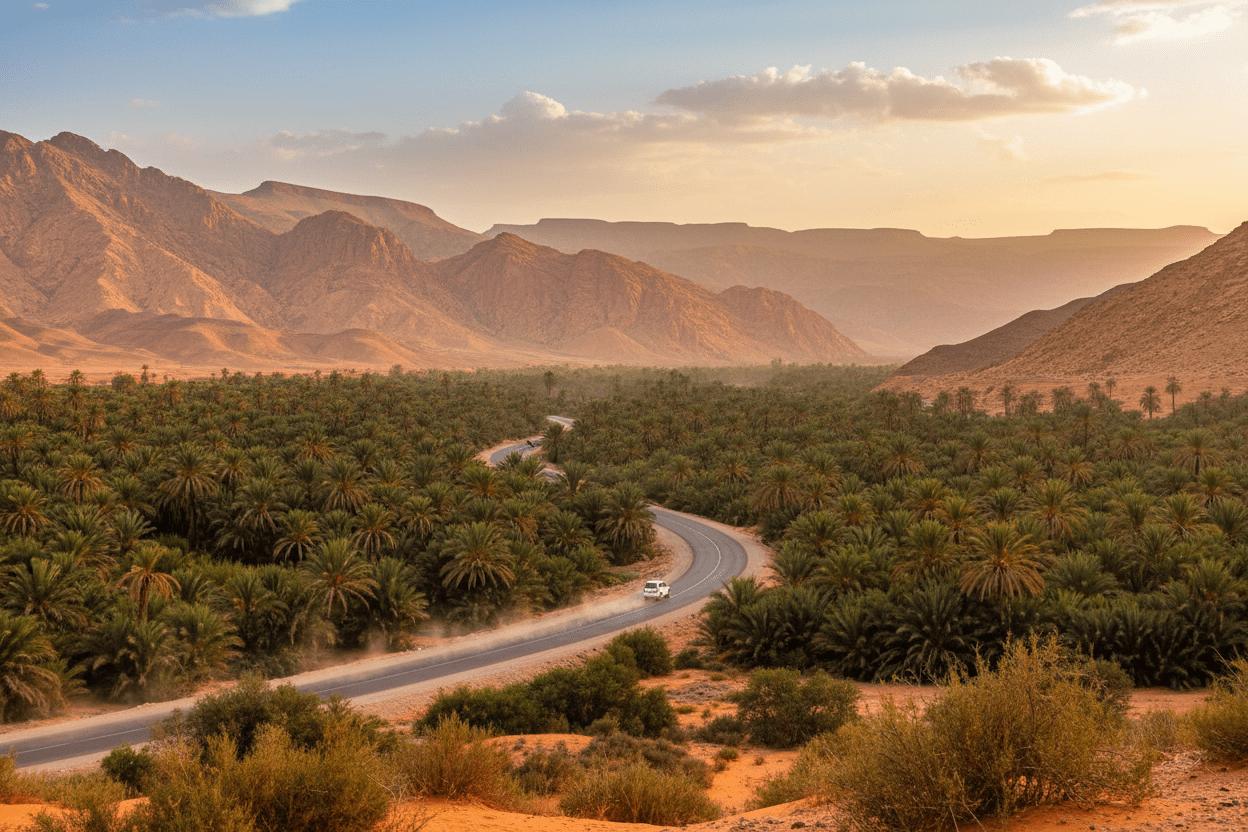
Reaching desert areas such as Merzouga involves a substantial road journey, but the route itself is part of the experience. Depending on your itinerary, you can pass through mountains, valleys, kasbahs, palm groves, and small towns along the way.
A multi-day desert trip is usually much more comfortable than trying to rush the journey.
7. Fes Medina Is Best Explored Slowly
The historic medina of Fes, Fes el-Bali, is famous for its dense network of narrow streets, souks, workshops, historic buildings, fountains, food stalls, and traditional crafts.
Rather than trying to rush through it, give yourself time to explore.
A knowledgeable local guide can also provide historical and cultural context while helping you navigate the medina's complicated streets.
88. Dress for the Place and the Weather
There is no single dress code for tourists throughout Morocco.
In major tourist destinations you will see many different styles of clothing. More modest clothing can be appropriate when visiting traditional neighborhoods, rural communities, or religiously significant locations.
Climate should also influence what you pack.
Moroccan weather varies considerably depending on the region, altitude, and season. Desert temperatures, Atlantic weather, mountain conditions, and temperatures in cities can be very different during the same trip.
Layers are particularly useful.
9. Comfortable Shoes Are Essential
If your itinerary includes Fes, Marrakech, Chefchaouen, or other historic towns, expect to walk.
Medinas frequently have uneven surfaces, narrow lanes, stairs, and areas inaccessible to cars.
Comfortable walking shoes are therefore one of the most useful things you can pack.
10. Bargaining Is Common in Traditional Souks
Shopping in Morocco's souks can be an experience in itself.
You'll find carpets, ceramics, leather products, spices, lamps, jewelry, traditional clothing, textiles, woodwork, and many other handmade products.
Where prices are not fixed, bargaining can be part of the transaction.
Keep negotiations friendly. Ask the price, make a reasonable counteroffer, and decide what the item is worth to you. If you cannot reach an agreement, politely declining is perfectly acceptable.
Modern stores, supermarkets, restaurants, and shops displaying fixed prices generally operate differently.
11. Ask Before Photographing People
Morocco offers exceptional photography opportunities, but remember that local people are not tourist attractions.
When a person is clearly the subject of your photograph, asking permission first is respectful.
Some people will agree and others may prefer not to be photographed.
This is particularly important in markets, rural communities, workshops, and residential areas.
12. Moroccan Food Goes Far Beyond Tagine
Tagine may be Morocco's most internationally recognizable dish, but Moroccan cuisine has much more to discover.
Depending on where you travel, look for couscous, pastilla, harira, rfissa, grilled meats, Moroccan salads, msemen, breads, seafood, dates, olives, pastries, and regional specialties.
Friday is traditionally associated with couscous in many Moroccan households.
Food tours and cooking classes can be excellent ways to learn about the culture behind Moroccan cuisine.
713. Mint Tea Is Part of Moroccan Hospitality
Moroccan mint tea is more than a drink.
Tea is commonly offered in homes, shops, hotels, riads, and social situations. Sitting down for tea can become an opportunity for conversation and hospitality.
Traditional tea is usually prepared using green tea, mint, and sugar.
If you are invited for tea, there is often no reason to hurry. Slowing down and enjoying these small interactions can become one of the memorable parts of visiting Morocco.
14. Taxis Work Differently Depending on the City
Taxis are widely used in Moroccan cities, but systems and practices can vary.
Cities commonly have petit taxis for journeys within the city, while grand taxis serve different routes and longer journeys.
Before starting a journey, it is useful to understand how fares work locally. Where meters are used, check that the appropriate procedure is followed. Otherwise, clarify the fare beforehand when necessary.
Your hotel or riad can often explain the local taxi system.
15. Staying in a Riad Is Part of the Experience
For a first trip to Morocco, consider spending at least a few nights in a traditional riad.
Riads are houses organized around an interior courtyard, and many historic properties have been converted into guesthouses and boutique accommodation.
Staying inside or near an old medina can provide a completely different atmosphere from staying in a modern international hotel.
16. Friday and Ramadan Can Affect Daily Schedules
Friday has particular religious significance in Morocco, and you may notice changes around midday as people attend Friday prayers.
Ramadan can have a greater effect on daily routines.
During Ramadan, Muslims who observe the month fast from dawn until sunset. Some businesses adjust their opening hours, daily rhythms change, and evenings can become especially lively after iftar, the meal that breaks the fast.
Tourism continues during Ramadan, but visitors should be prepared for schedule changes and respect local customs.
17. Not Every Mosque Is Open to Tourists
Morocco contains extraordinary Islamic architecture, but visitors should not assume they can enter every mosque.
Access to active mosques may be restricted to Muslims, while rules for historic monuments and other religious sites differ.
Check the rules at each location and follow instructions regarding clothing, photography, and visitor access.
Historic madrasas and other cultural monuments can provide excellent opportunities to discover Moroccan architecture and decorative arts.
18. Don't Try to See the Entire Country in One Week
Morocco may look relatively compact on a map, but travel times can be substantial.
Trying to combine Tangier, Chefchaouen, Fes, the Sahara, Marrakech, Essaouira, Casablanca, and the Atlas Mountains into a very short trip can mean spending much of your holiday in transit.
For a shorter first visit, choose a manageable route.
For example, you might combine Fes + Chefchaouen + the Sahara, or plan a journey connecting Fes and Marrakech through the desert.
With 10–14 days, you can explore more regions at a comfortable pace.
19. The Sahara Is About More Than a Camel Ride
For many visitors, seeing the Sahara is one of the highlights of Morocco.
But the experience goes beyond riding a camel.
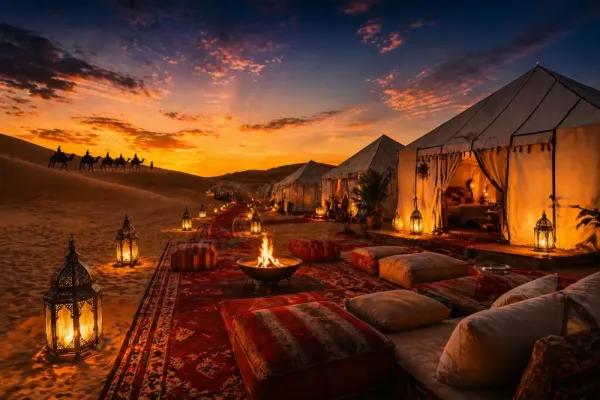
Depending on your itinerary, a desert stay can include watching the sunset over dunes, traditional music, stargazing, local food, 4×4 excursions, sunrise walks, visits to nearby communities, and an overnight stay in a desert camp.
Merzouga, near the Erg Chebbi dunes, is one of Morocco's well-known gateways to this experience.
620. Leave Space for Unplanned Experiences
Planning your accommodation, transportation, and major destinations is useful, but not every hour needs to be scheduled.
Some memorable experiences in Morocco can happen unexpectedly: discovering a small artisan workshop, stopping for mint tea, trying food you have never seen before, watching sunset from a rooftop, or talking with people you meet along the way.
Give yourself enough time to experience the places you visit rather than simply checking them off a list.
Final Thoughts for Your First Trip to Morocco
Your first journey through Morocco can combine history, culture, food, nature, architecture, and adventure in a relatively small geographical area.
Prepare for the practical details, but remain curious once you arrive.
Explore the medinas of Fes, taste traditional Moroccan cuisine, cross the Atlas Mountains, discover ancient kasbahs, experience local hospitality, and, if your itinerary allows, watch the sun disappear behind the dunes of the Sahara.
Understanding a few local customs and avoiding an overly ambitious itinerary can make your first visit considerably easier and more enjoyable.
Explore Morocco With Fes Morocco Tours
If you are planning your first visit to Morocco, Fes Morocco Tours can help you experience the country through private and tailor-made itineraries.
From Fes and Chefchaouen to the Atlas Mountains, Marrakech and the Sahara, travelers can combine Morocco's major destinations with cultural experiences, historic sites, traditional food, local communities, and desert adventures.
Whether you have a few days or several weeks, your itinerary can be adapted to your travel dates, interests, and preferred pace.