Today, 18 November, Morocco celebrates its Independence Day. It is a good moment to look back at the long history of Fes, the oldest of Morocco's imperial cities and one of the most important cultural centres of the Islamic world.
This guide tells the story of Fes from its foundation more than 1,200 years ago to today.
The Foundation: The Idrisids (8th-9th Century)
In 789, Idris I, a descendant of the Prophet Muhammad who had fled to Morocco, founded a settlement on the east bank of the Fes river. After his death, his son Idris II founded a second town on the west bank around 808-809 and made it the capital of the Idrisid state.
Idris II is considered the true founder of Fes. His mausoleum, the Zawiya of Moulay Idris II, is still one of the most sacred places in the city.
Two Banks, Two Communities
In the early 9th century, the city welcomed refugees from Cordoba in Al-Andalus and from Kairouan in Tunisia. They settled on opposite banks, creating the Andalusian quarter and the Qarawiyyin quarter, each with its own great mosque.
Al-Qarawiyyin (859)
In 859, Fatima al-Fihri, a woman from a wealthy Kairouan family, founded the Al-Qarawiyyin mosque. It became a major centre of learning, and is often described as the oldest continuously operating university in the world. Scholars from across the Mediterranean studied here.
The Almoravids and Almohads (11th-13th Century)
In the 11th century, the Almoravids united the two banks into one walled city and developed its water system. Under the Almohads, Fes continued to grow as an economic and intellectual centre.
The Golden Age of the Marinids (13th-15th Century)
The Marinids made Fes their capital and gave the city many of its greatest monuments:
- In 1276, they founded Fes el-Jdid (New Fes), a royal city with palaces and barracks.
- They built beautiful madrasas such as Bou Inania and Al-Attarine.
- The Mellah, the Jewish quarter, developed next to the palace.
This was the golden age of Fes, when it was one of the largest and richest cities in the world.
The Saadians and Alaouites
Under the Saadians (16th century), Marrakech became the main capital, but Fes kept its religious and cultural importance. The Alaouite dynasty, which still rules Morocco, came to power in the 17th century, and Fes became a capital again several times.
The Protectorate and the Capital Move (1912)
In 1912, the Treaty of Fes established the French protectorate over Morocco. The capital was moved to Rabat. The French built the modern Ville Nouvelle, leaving the old medina largely intact.
Independence (1956)
Fes played an important role in the nationalist movement. Morocco became independent in 1956, after the return of King Mohammed V from exile, which is celebrated every year on Independence Day.
UNESCO World Heritage (1981)
In 1981, the Medina of Fes was listed as a UNESCO World Heritage Site. It is one of the largest car-free urban areas in the world and one of the best-preserved medieval cities of the Arab-Muslim world.
Fes Today
Today, Fes is Morocco's spiritual and cultural capital. Restoration projects continue to protect its madrasas, fountains and funduqs, while artisans keep alive crafts that have existed for centuries.
Where to See This History
- Zawiya of Moulay Idris II (from outside for non-Muslims).
- Al-Qarawiyyin and its surrounding streets.
- Bou Inania and Al-Attarine madrasas.
- Fes el-Jdid, the Royal Palace gates and the Mellah.
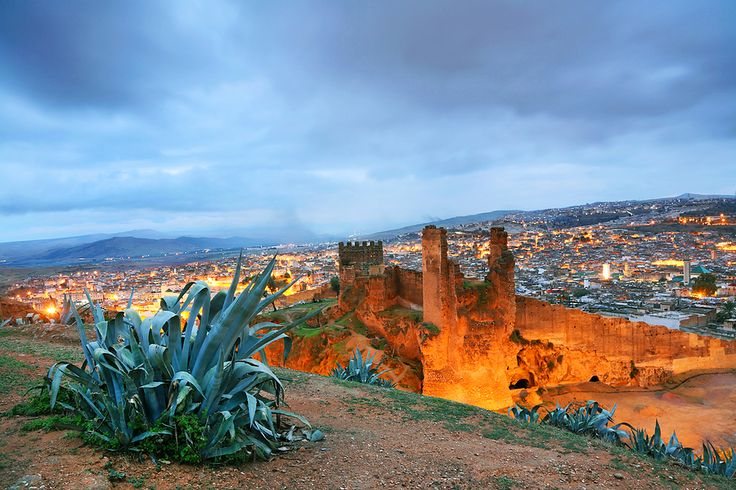
- The Merenid Tombs viewpoint.
Discover all the sights in our 25 best things to do in Fes.
Frequently Asked Questions
How old is Fes?
Fes was founded in 789, making it more than 1,200 years old.
Who founded Fes?
Idris I founded the first settlement and Idris II developed it into a city and capital.
Why is Fes important?
It is Morocco's oldest imperial city, a major centre of Islamic learning and home to one of the best-preserved medinas in the world.
Walk Through 1,200 Years of History
Explore the history of Fes with a licensed local guide. See our Fes activities or contact Fes Morocco Tours.